
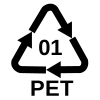
PET 01
Polyethylene terephthalate
good recyclability
Beverage and mineral water bottles, films. Very good recyclability, well-established material loop.
Disposal: Recyclables bin (deposit bottles: reverse vending machine)
RESY symbol / material number
The standardised material labelling (e.g. PET 01, PAP 20, ALU 41) tells end customers and sorting facilities what a packaging is made of and which collection fraction it belongs to. All codes with material, recyclability and download of the official symbol.
Polyethylene terephthalate
Beverage and mineral water bottles, films. Very good recyclability, well-established material loop.
Disposal: Recyclables bin (deposit bottles: reverse vending machine)
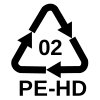
Polyethylene, high density (HDPE)
Canisters, bottles for cleaning products and cosmetics, rigid packaging. Good recyclability.
Disposal: Recyclables bin
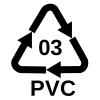
Polyvinyl chloride
Rare and undesirable in packaging — disrupts plastics recycling. Tubing, blister packs.
Disposal: Residual waste or separate collection
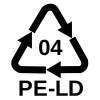
Polyethylene, low density (LDPE)
Films, carrier bags, shrink wrap. Recycling depends on cleanliness and sorting.
Disposal: Recyclables bin
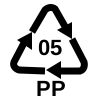
Polypropylene
Cups, lids, closures, food-grade containers. Good recyclability.
Disposal: Recyclables bin
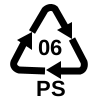
Polystyrene
Yoghurt pots, expanded polystyrene (EPS). Rarely recycled as a material.
Disposal: Recyclables bin (low recovery rate)
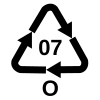
Other plastics / mixed plastics
Catch-all category for plastics that cannot be clearly assigned or are multi-layered. Hard to separate.
Disposal: Recyclables bin / residual waste
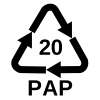
Corrugated board
Shipping and transport boxes. Very high recycling rate.
Disposal: Paper bin / waste paper
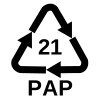
Other board (carton)
Folding cartons, product packaging made from solid board.
Disposal: Paper bin / waste paper
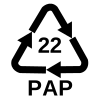
Paper
Package inserts, labels, paper bags. Good recyclability provided it is not coated.
Disposal: Paper bin / waste paper
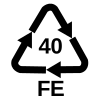
Steel / tinplate
Food cans, closures. Sorted magnetically, recyclable with almost no losses.
Disposal: Recyclables bin
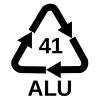
Aluminium
Beverage cans, food trays, lids. Very energy-efficient recycling.
Disposal: Recyclables bin
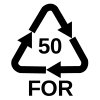
Wood
Crates, pallets, crating. Can be recovered as material or energy.
Disposal: Recycling centre / bulky waste
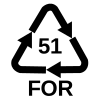
Cork
Natural corks, insulating inserts. Recoverable via dedicated collection points.
Disposal: Cork collection / residual waste
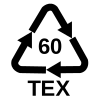
Cotton
Fabric bags, padding material. Recoverable via textile collection.
Disposal: Textile collection / residual waste
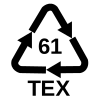
Jute
Sacks, natural-fibre packaging. Biodegradable.
Disposal: Residual waste / composting
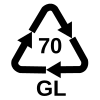
Clear glass
Bottles and jars for food and beverages. Endlessly recyclable without loss of quality.
Disposal: Glass bank — clear glass
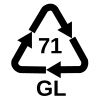
Green glass
Wine and sparkling wine bottles. Green glass also absorbs off-colours.
Disposal: Glass bank — green glass
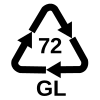
Brown glass
Beer and pharmaceutical bottles. Protects light-sensitive contents.
Disposal: Glass bank — brown glass
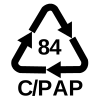
Beverage carton (paper + plastic + aluminium)
Tetra Pak and similar. Multi-layer composite — separating the layers is complex but established.
Disposal: Recyclables bin
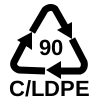
Plastic + aluminium
Coffee vacuum packs, blister packs. The composite makes recycling harder.
Disposal: Recyclables bin
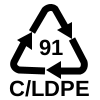
Plastic + tinplate
Certain tubes and lids. The composite makes recycling harder.
Disposal: Recyclables bin
Stand: 12.09.2026 · geprüft von Erik Eggerth
Select the appropriate code in the label editor, place it on the label and export a print-ready PDF.
Start for free